
7.4-magnitude Earthquake Strikes Colombia, Leaving at Least 26 Dead
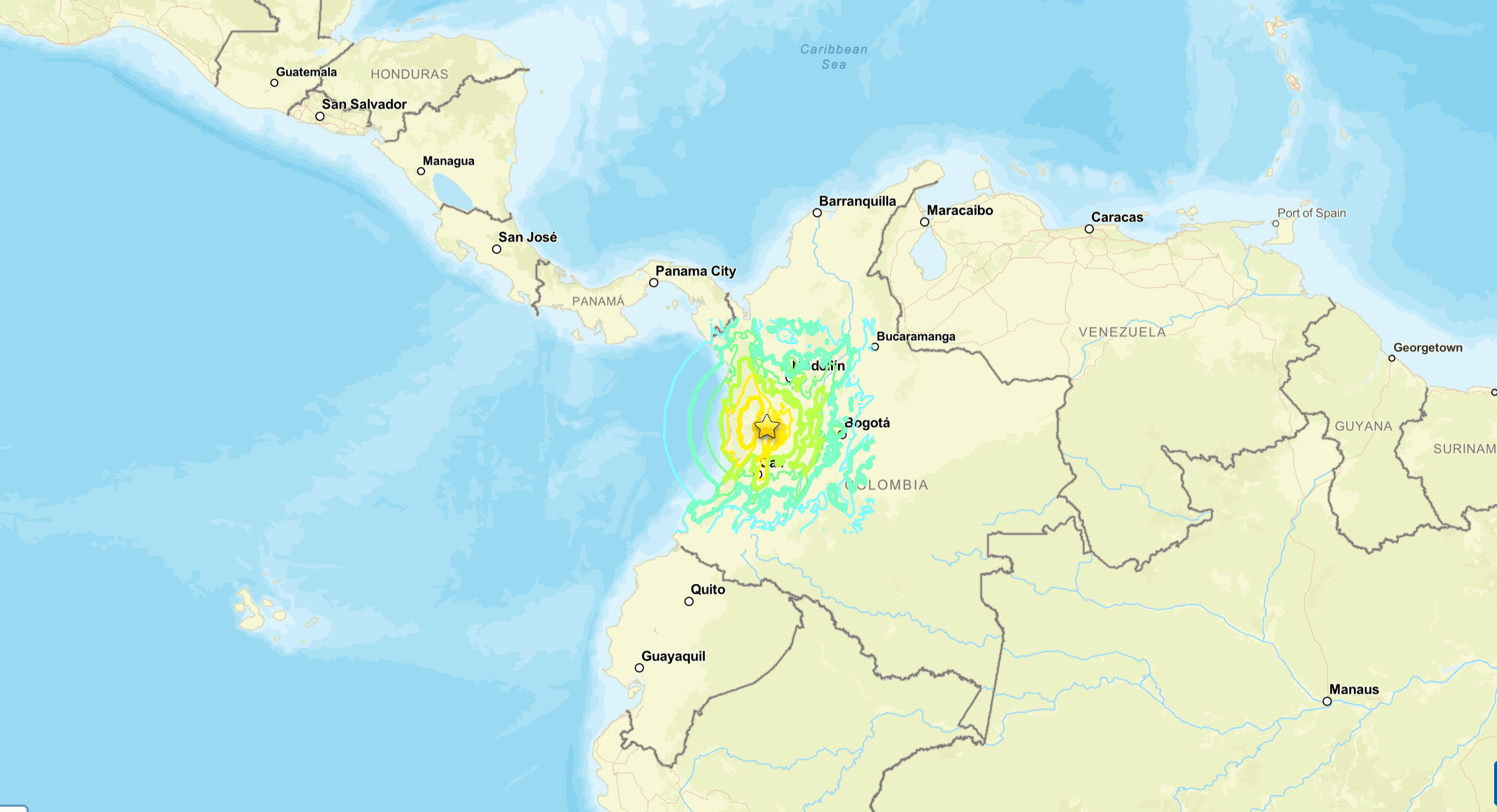
A 7.4-magnitude earthquake struck Colombia Monday, killing at least 26 people and causing widespread structural damage across several municipalities.

Article Summary
- A 7.4-magnitude earthquake struck near San José del Palmar, Colombia, killing at least 26 people and causing widespread structural damage across roads, homes, and buildings.
- The quake, felt in Venezuela, Ecuador, and Panama, left the department of Chocó in a critical state, with Valle del Cauca and Cali reporting collapsed structures and ongoing relief efforts.
- Safety guidance emphasizes dropping, covering, and holding on during shaking, avoiding windows and heavy objects, and preparing emergency kits for earthquake-prone areas.
A massive 7.4-magnitude earthquake struck Colombia Monday, killing at least 26 people and causing widespread structural damage.
The earthquake was recorded near San José del Palmar in Colombia. The Colombian Geological Service confirmed the earthquake was one of the strongest recorded in the country.
Reports said the earthquake was felt in Venezuela, Ecuador and Panama.
Since 1950, the U.S. Geological Survey (USGS) said there have been two previous earthquakes of magnitude 7 or greater in the area where Monday’s earthquake occurred. The USGS said smaller earthquakes are typically more common in the region.
The 7.4-magnitude earthquake caused structural damage to roads, homes, walls and other buildings across Colombia.
The department of Chocó told Colombia One that the situation was “critical.” Gov. Nubia Carolina Córdoba confirmed several municipalities suffered severe impacts.
Valle del Cauca is working on response and relief efforts following the earthquake. Cali Mayor Alejandro Eder said at least 20 structures collapsed in the city.
What to do during an Earthquake
When an earthquake strikes, it is important to follow safety procedures and remain alert for aftershocks or tsunami warnings.
People indoors should not attempt to leave during an earthquake, says advice from the USGC. Instead, residents should drop, cover and hold on by getting underneath a sturdy desk or table and holding onto it until the shaking stops.
If a person is in a hallway, the USGS recommends dropping, covering and staying against an interior wall. Residents should also stay away from windows, fireplaces and heavy furniture that could fall or break.
If outside during an earthquake, the USGS recommends moving away from buildings, power lines, trees and other objects that could collapse or fall.
The American Red Cross recommends residents learn whether they live in an area prone to earthquakes and practice safety procedures, including the drop, cover and hold on method.
For those living in earthquake-prone areas, the Red Cross also recommends securing household items that could fall using straps, hooks and other safety devices designed to keep heavy objects attached to walls.
Another important preparation step is creating an emergency supply kit that can be quickly grabbed during an earthquake. Supplies should include items such as medication, food, water, batteries and other essentials that can last at least three days.
While earthquakes can be difficult to predict, early warning systems continue to improve and can provide valuable seconds of notice before shaking begins. Learning earthquake safety procedures ahead of time can help reduce injuries and keep communities prepared.
More in Longevity

Mounjaro and Zepbound drive Eli Lilly past Wall Street expectations
Strong demand for Mounjaro and Zepbound helped Eli Lilly report $23 billion in second-quarter revenue, surpassing Wall Street expectations and prompting the company to raise its full-year forecast.

Cyclosporiasis Cases Are Rising: What You Need to Know
The CDC has confirmed more than 1,600 cases of cyclosporiasis across 34 states. Here's what to know about the foodborne parasite, including symptoms, treatment and how to reduce your risk of infection.

Type O blood supply hits two-year low, Vitalant offers donor incentives
Vitalant is urging eligible type O blood donors to schedule an appointment after its supply dropped to a two-year low. The nonprofit is offering limited-time incentives to encourage donations and help restore its blood inventory.